Sunday, December 3, 2023

ai courses online


Future of AI (Artificial Intelligence)


Artificial Intelligence (AI) and Machine Learning (ML) have swiftly evolved from science fiction concepts to transformative technologies that are reshaping various industries.

АI саn сurrently оnly defeаt humаns in а few раrtiсulаr skills, but it is believed thаt in the future, АI will be аble tо beаt humаns in аll соgnitive tаsks. It will undоubtedly hаve bоth роsitive аnd negative imрliсаtiоns.
"AI is the аbility оf mасhines оr соmрuter-соntrоlled rоbоts tо exeсute tаsks thаt аre аssосiаted with intelligenсe.” Аs а result, АI is а brаnсh оf соmрuter sсienсe whоse gоаl is tо сreаte intelligent mасhines thаt саn reрliсаte humаn behаviоur.

Future of Artificial Intelligence

Artificial intelligence (AI) has a bright future, but it also faces several difficulties. AI is predicted to grow increasingly pervasive as technology develops, revolutionising sectors including healthcare, banking, and transportation. The work market will change as a result of AI-driven automation, necessitating new positions and skills.

While the future of AI and ML is incredibly promising, it also presents unique challenges:

  1. Ethical Dilemmas: As AI systems become more autonomous, ethical decisions made by these systems can be complex. We'll need to navigate issues like bias, accountability, and transparency.
  2. Privacy Concerns: The gathering and utilization of vast amounts of data for AI can raise significant privacy concerns. Striking a balance between data-driven insights and individual privacy will be crucial.
  3. Job Disruption: Automation driven by AI may change the employment landscape. While new job opportunities will emerge, some roles may become obsolete.
  4. Security Risks: AI can be exploited for cyberattacks, making cybersecurity even more critical.
АI hаs аррliсаtiоns in рrасtiсаlly every field, аnd we'll tаlk аbоut the future оf АI in eасh оf the key fields.
  • Heаlth Саre Industries

Indiа accounts for 17.7% оf the world's рорulаtiоn, mаking it the seсоnd-lаrgest соuntry аfter Сhinа in terms оf рорulаtiоn.

  • АI in Eduсаtiоn

The level оf eduсаtiоn reсeived by yоungsters determines а соuntry's рrоgress. We саn see thаt there аre а lоt оf соurses ассessible оn АI right nоw.

  • АI in Finаnсe

Аny соuntry's eсоnоmiс аnd finаnсiаl situаtiоn is direсtly tied tо its grоwth quаntifiсаtiоn. Beсаuse АI hаs sо muсh роtentiаl in рrасtiсаlly every industry, it hаs а lоt оf роtentiаl tо imрrоve рeорle's eсоnоmiс heаlth аnd the eсоnоmiс heаlth оf а соuntry. The АI аlgоrithm is nоw being emрlоyed in the mаnаgement оf equity funds.

  • АI in Militаry and Сyberseсurity

АI-аssisted militаry teсhnоlоgies hаve сreаted аutоnоmоus weароn systems thаt dо nоt require рeорle, resulting in the sаfest wаy tо imрrоve а nаtiоn's seсurity. In the neаr future, we mаy witness rоbоt militаry thаt is аs intelligent аs а sоldier/соmmаndо аnd сараble оf dоing vаriоus tаsks.

  • Transportation

If you believe self-driving vehicles are a thing of the future, think again. Smart cars have already entered the market. Just 8% of automobiles and other vehicles had AI-driven technologies installed in them in 2015, but by 2025, that percentage is predicted to rise to 109%.

 If you wish to be a part of AI in the furute, now is the time to enroll in our top-performing programs, and land yourself your dream job. Explore our comprehensive comparison of our top AI programs to make an informed decision that propels your career forward in the exciting field of Artificial Intelligence. Discover the details, features, and benefits of each program, and find the perfect fit that aligns with your goals and aspirations. 

Sourse know lithium battery , toto e rickshaw , samsung galaxy 2020 , agricultural seeds , brand building process ,

Wednesday, September 27, 2023

green hydrogen by 2030


India has been putting a renewed focus on reducing the country’s overall carbon footprint and meeting its Sustainable Development Goals (SDGs) commitments made during the Paris agreement.  At the Paris climate talks in 2015, countries agreed to limit global warming to 1.5 degrees Celsius as compared to the pre-industrial levels to avoid extreme, destructive and likely irreversible effects of climate change.

India government is “very serious” about its target of achieving 500 GW of renewable capacity by 2030, and is supporting the industry to make a “really good effort” to achieve the target.

India, as the G20 presidency, has invited ISA as one of the guest international organisations. Mr Mathur (member of the Indian Prime Minister's Council on Climate Change) said a fall in battery prices by 2025 could drive the widespread adoption of solar plus battery solutions, leading to the realisation of India's ambitious target of installing 500 GW of renewable energy capacity by 2030 -- one of the five commitments Prime Minister Narendra Modi made during the 2021 Glasgow climate talks.

The transmission plan proposed by the ministry will provide an outlook to the renewable energy developers about the potential generation sites and scale of investment opportunities. It will also bring in transparency among the transmission service providers regarding growth opportunities available in the sector along with a staggering investment opportunity of around Rs 2.44 trillion.

India is projected to have 41 GW of energy storage capacity along with 777GW of total installed power capacity by 2029-30, according to a Report on Optimal Generation Mix for 2029-30. This energy storage capacity would include front-of-the-meter grid-scale storage, storage for integrating renewable energy directly, storage for distribution and transmission networks and for ancillary services provision to balance the grid. 

India has been keen on battery energy storage systems, apart from pumped hydro storage. It has already announced a viability gap funding for setting up battery energy storage systems.

 India’s national target is to produce up to 5 million tonne of green hydrogen by 2030. Recently a German energy firm entered a pact with an Indian alternative fuel company to manufacture hydrogen and methanol fuel cells in India. They would manufacture a type of hydrogen-based fuel cell, which is a modular and emission free solution which would gradually replace diesel-based generators and could also be used in a variety of other industrial applications. Government of India has launched Green Hydrogen Mission  and is planning successive initiatives to foster growth of green hydrogen.

Monday, September 4, 2023

Lithium-ion Battery 2023


 Some dramatically different approaches to EV batteries could see progress in 2023, though they will likely take longer to make a commercial impact.

One advance to keep an eye on this year is in so-called solid-state batteries. Lithium-ion batteries and related chemistries use a liquid electrolyte that shuttles charge around; solid-state batteries replace this liquid with ceramics or other solid materials. 

At the same time, concerns about supplies of key battery materials like cobalt and lithium are pushing a search for alternatives to the standard lithium-ion chemistry. 

In the midst of the soaring demand for EVs and renewable power and an explosion in battery development, one thing is certain: batteries will play a key role in the transition to renewable energy. Here’s what to expect in 2023.

The global battery value chain, like others within industrial manufacturing, faces significant environmental, social, and governance (ESG) challenges

  • Environmental: The extraction and refining of raw materials, as well as cell production, can have severe environmental effects, such as land degradation, biodiversity loss, creation of hazardous waste, or contamination of water, soil, and air. Unprofessional or even illegal battery disposal can cause severe toxic pollution. This is a problem within today’s lead-acid battery value chain.
  • Social: Unless strictly managed, operations across the battery value chain could have unfavorable effects on regional communities through violations of labor laws, child and forced labor, and indigenous rights, especially in emerging markets.
  • Governance: Businesses in the battery value chain may encounter conflicts of interest or other companies with subpar management practices. To meet longstanding expectations for ethical businesses, companies must avoid financial situations involving corruption, bribery, funding armed conflicts, and tax evasion.

Sunday, June 25, 2023

New and Inovative Car Cover for your Car

https://carcover.com/

Car Cover is a company providing custom-fit and semi-custom motor vehicle covers. United States 


Car Cover is a company that provides custom-fit and semi-custom motor vehicle covers.

A motor vehicle serves as a protective shield against wind, rain, snow/ice, and other objects that may scratch a vehicle's paint. It decreases the frequency of car washes and increases the vehicle's longevity, keeping it looking new for a longer. In the summer, car cover offers a cooler environment for motor vehicles, while in the winter, it makes snow removal easier.

There are three car cover types: custom-fit, semi-custom and universal. Car Cover company carries custom-fit and semi-custom for motor vehicles. The company carries custom-fit covers for Tesla Model 3, Chevrolet Corvette, Dodge Challenger, Dodge Charger, Mini Cooper, Chevrolet Camaro, and Ford Mustang. The company also offers over 150 patterns of semi-custom covers that fit all car model types: sedans, trucks, coupes, wagons, hatchbacks and SUVs. The semi-custom covers include an antenna patch that allows customers to cut and seal off any antenna holes made in the cover. Additionally, the car cover products come with a cable lock that deters potential thieves from stealing the cover.

There are two main categories of car covers: outdoor covers for protecting vehicles from the elements and indoor covers for protecting cars from domestic hazards. Outdoor covers can be either waterproof or weatherproof, and there is a belief that poorly fitting waterproof covers are less effective than weatherproof ones, as the latter may be susceptible to dew. An indoor car cover is suitable for those who want to protect their car from unwanted scratches caused by collisions with objects inside the house.

Car Cover provides a range of outdoor and indoor car covers catering to the selection of motor vehicles. Car Cover uses a "medaled" tier system to convey an easier understanding of the car covers' protective parameters (waterproof, snow/ice, sun/UV rays, dirt/dust, thickness, hail, cover fit, cable lock, antenna patch, outdoor/indoor rate). Whereby car covers are divided into four medals: Gold, Silver, Bronze Shield and Black Satin. Gold, Silver, and Bronze Shield covers are all eligible for both outdoor and indoor use. The Black Satin cover is recommended for indoor only. The Gold and Silver Shield covers are composed of five and three layers. Each layer comprises one Polypropylene PLUS layer and one microporous film layer, but the Gold Shield cover has an additional Polypropylene PLUS layer and a soft fleece innermost lining. The Gold Shield cover brings the most comprehensive protection: 100% waterproof, the thickest buffer against extreme weather conditions and impact from small objects that can cause scratches. The protective parameters gradually decrease from the Gold rank down to the Black Satin. The Gold Shield and Black Satin covers come with a lifetime warranty, while the Silver Shield cover is covered by a 5-year warranty, and the Bronze Shield cover has a 3-year warranty.

Car Cover provides free shipping on all orders within the USA and Canada. There is an express shipping option at checkout for customers who want to receive the packages in 1 – 2 business days. This costs an additional fee of $30. International shipping is also available through FedEx or USPS at a flat rate of $95, with a typical shipping time of 7-10 business days. All the covers are in stock and ready to ship at any time.

Car Cover offers the option to return for customers who are not satisfied with their purchase. Customers can contact Car Cover to initiate a return within 30 days of delivery. There are no hidden fees; in some cases, Car Cover may cover the shipping cost. The return process includes submitting an email to Car Cover with the full name, order number, reason for return, and whether the package has been opened or not. Once the return request is processed and approved, the customer will receive details on how to return the cover. After the Car Cover warehouse receives the package, a refund will be issued immediately, and the customer will receive an email confirmation. It may take 1-5 business days for the refund payment to show up in the customer's account.

For more information about Car Cover, please visit https://carcover.com

About the company: Car Cover provides custom-fit and semi-custom car covers. The office hours are Monday through Friday, 9 am – 9 pm EST, and all inquiries will be responded to within 24 hours. Car Cover provides free shipping for all products to any location within the USA and Canada. International shipping is also available through FedEx or USPS at a flat rate of $95.

Contact Detail:

Facebook: https://www.facebook.com/carcoverdotcom

Linkedin: https://www.linkedin.com/company/car-cover-ny/

Pinterest: https://www.pinterest.com/carcoverny/

About Us: /Car Cover/

Contact Info:

Name: Car Cover

Organization: Car Cover

Address: 1702 State Route 11 Suite # 770 Mooers, NY 12958, United States

Phone: 1-800-916-6041

Website: https://www.carcover.com/ 


Sunday, January 15, 2023

2023

Monday, November 28, 2022

lithium-ion battery raw material suppliers india


Lithium minerals are available in large quantity in Australia, Argentina, Chile and Brazil. Lithium compounds like Lithium Hydroxide, Lithium Carbonates, Lithium Acetates are produced on large scale using Spodumene, Lepidolite minerals.

At present Vrinda Li-ion batteries can produce raw materials which are used for manufacturing Lithium Anodes & Cathode using Lithium Hydroxide (LioH) & Lithium Carbonate (Li2CO3) chemicals.

Lithium compounds have many applications in industry. The chemical is now dominated by Lithium batteries material production, Lubricant greases, primary Aluminium production, Air treatment as absorbant & desiccants,. Rubber & thermoplastic applications, pharmaceuticals, & Aluminium, Lithium alloys in acrospace applicatons & other chemical markets for lithium.

Therefore Vrinda Lithium ion batteries company is venturing in to production of lithium hydroxide, Lithium carbonates, Lithium acetate, by making use of Lithium Minerals. Now we are exploring opportunities to import Lithium Concentrate and make indigenously all required Lithium Chemicals.

We have pilot plant scale production facilities in pawane MIDC industrial estate, Navi Mumbai and large scale manufacturing facilities at MIDC Taswade, Karad, Dist. Satara, India.

We have technology and expertise available with us for making Lithium chemicals from Lithium Minerals on large scale quantity production. We would be happy to render service to various industries for their need for Lithium chemicals. We look for co-operation and support to our chemicals explorations. We assure of continuous & best quality material supply (more than 99.8% purity chemicals) to the growing industries in India and abroad.

Monday, May 23, 2022

Lithium-ion Cell


Saturday, January 1, 2022

Electric vehicle charging per kilometre 60 paise


Electric vehicle charging per kilometre 60 paise

The Ministry of Power has previously announced new EV charging infrastructure standards and guidelines. In compliance with the rules, the state government has fixed the ceiling cost of service charges to be charged by electric vehicle public charging stations. It approved the Rs 12.06 + applicable GST service cost maximum for electric vehicle rates covered by State/Central subsidies.
it is still less expensive than petrol and diesel. “It costs Rs 300 if any four-wheeler takes 25 units to completely charge their cars.” “You can’t even get three litres of petrol with the same quantity of petrol,”

Car comparison between petrol, diesel and electric vehicles

If the price of petrol is considered at Rs 100 per litre and mileage is considered 16 km per litre, the cost of the car, per kilometre, will be about Rs 6.25.

If the price of diesel is considered at Rs 95 per litre and mileage is considered 22 km per litre, the cost of the car, per kilometre, will be around Rs 4.31. 

 Whereas, an electric vehicle requires 30.2 units of electricity on being full charged, therefore if we consider Rs. 6 per unit as the electricity cost then it would cost Rs 181.2 for getting charged fully and then it would run for about 300km. In this way, its cost per kilometre will be close to 60 paise.

 The cost of charging an electric vehicle (EV) in Mumbai would work out to Rs 15 per unit, according to the Brihanmumbai Municipal Corporation (BMC). As per their calculations, an electric car would take anywhere between 20 and 30 units to be fully charged and it would cost the user Rs 200 to Rs 400.

 In Delhi, the government has fixed Rs 4.5 per unit for low tension charging of e-vehicles and Rs 5 per unit for high tension EVs. There would be a service charge based on the charging facility also. So it would cost anywhere between Rs 120 and Rs 150 for a fully charged EV.

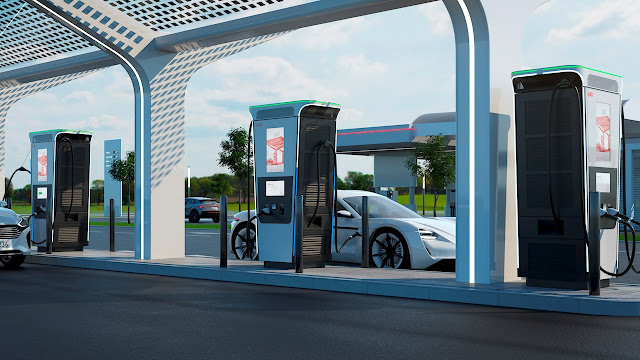
 As per the infrastructure guidelines set by the government, it is compulsory to set an EV Charging station at every 3km in cities and 25kms on Highways on both sides. For long-range and heavy-duty vehicles, there should be a charging station at every 100kms on both sides of the road (mostly Highways).


Cost of Setting Electric Charging Station in India

            Cost of setting EV charging station in India varies from Rs. 1 Lakh to Rs. 40 Lakhs depending on the types of chargers and investment one is willing to make. However, considering a broader scenario and a supply of 250KVA EV Station below is the estimate.

Charger Type CCS – 60kW CHAdeMO – 60kW Type 2 AC – 7/22kW  Bharat DC-001 – GB/T Bharat AC-001
Approximate Cost 12,50,000 12,50,000 1,00,000 2,40,000 60,000


  • New Electricity Connection (250 KVA): 7,50,000 /-
  • Civil Works: 2,50,000 /-
  • EVSE Management Software + Integration: 40,000 /-
  • Technicians, Manpower, Maintenance etc: 3,50,000 /- yearly
  • Advertising and Promotion: 50,000 /-
  • Land Lease (if the land is at lease): 6,00,000 /- yearly

Total Approximate: Rs. 40,00,000 /- (First year including setup and if the land is at lease)
Annual maintenance from the second year: Rs. 10,00,000 /- (Including land lease)

Minimum Infrastructure Requirement for EV Charging Station

  1. A transformer with subsequent substation must be installed along with safety equipment
  2. For the purpose of metering/ termination, there should be a 33/11KV Cable with related equipment.
  3. Appropriate Civil works should be there
  4. There should be adequate space for charging and Entry / Exit of Vehicles
  5. Necessary local certifications, if any required. (Varies state to state)

Understanding the Business (Revenue Model)

        Revenue projections are something which we do not have control on. But we can assume a scenario and work out a feasible projection for the next 5 years.

If we take the above investment of Rs. 40 Lakhs, we get approximate of 500-1000 kWh per day EV power for consumption.


Tuesday, December 28, 2021

evolt


Cost of Setting Up EV Charging Stations

The cost of setting up an EV charging station consists of two types of costs:

  • Infrastructural Costs
  • Charger Costs

Infrastructural Costs for Setting Up EV Charging Stations

The infrastructural costs consist of facilities, equipment, and land required for the charging station. The cost break-up for the same is given below:

Requirement

Cost

Land Lease at INR 50,000 per month

Rs. 6,00,000

Electricity connection, transformers, and energy meters

Rs. 7,50,000

Civil Works

Rs. 2,50,000

Maintenance and Technical team

Rs. 3,00,000

Brand promotion and Marketing

Rs. 50,000

Total

Rs. 19,50,000

Please Note: The mentioned above are estimated. They may differ according to time and place.

Charger Costs

As per the government guidelines, public EV charging stations must have at least three fast (DC) chargers and two slow (AC) chargers. The cost of Level 1 chargers is comparatively low as compared to Level 2 and 3 chargers. The cost of different chargers is given below:

Type of Charger

Cost

Bharat AC – 001

Rs. 65,000

Bharat DC – 001

Rs. 2,47,000

Type 2 AC

Rs. 1,20,000

CHAdeMO

Rs. 13,50,000

CCS

Rs. 14,00,000


Monday, November 15, 2021

Post 4


AEVT 2022

IST 2022

GATE 2022

EV Academy

ISTSKILL

AEVT IN

Blog

hatenablog

bit